A connected approach to operational complexity
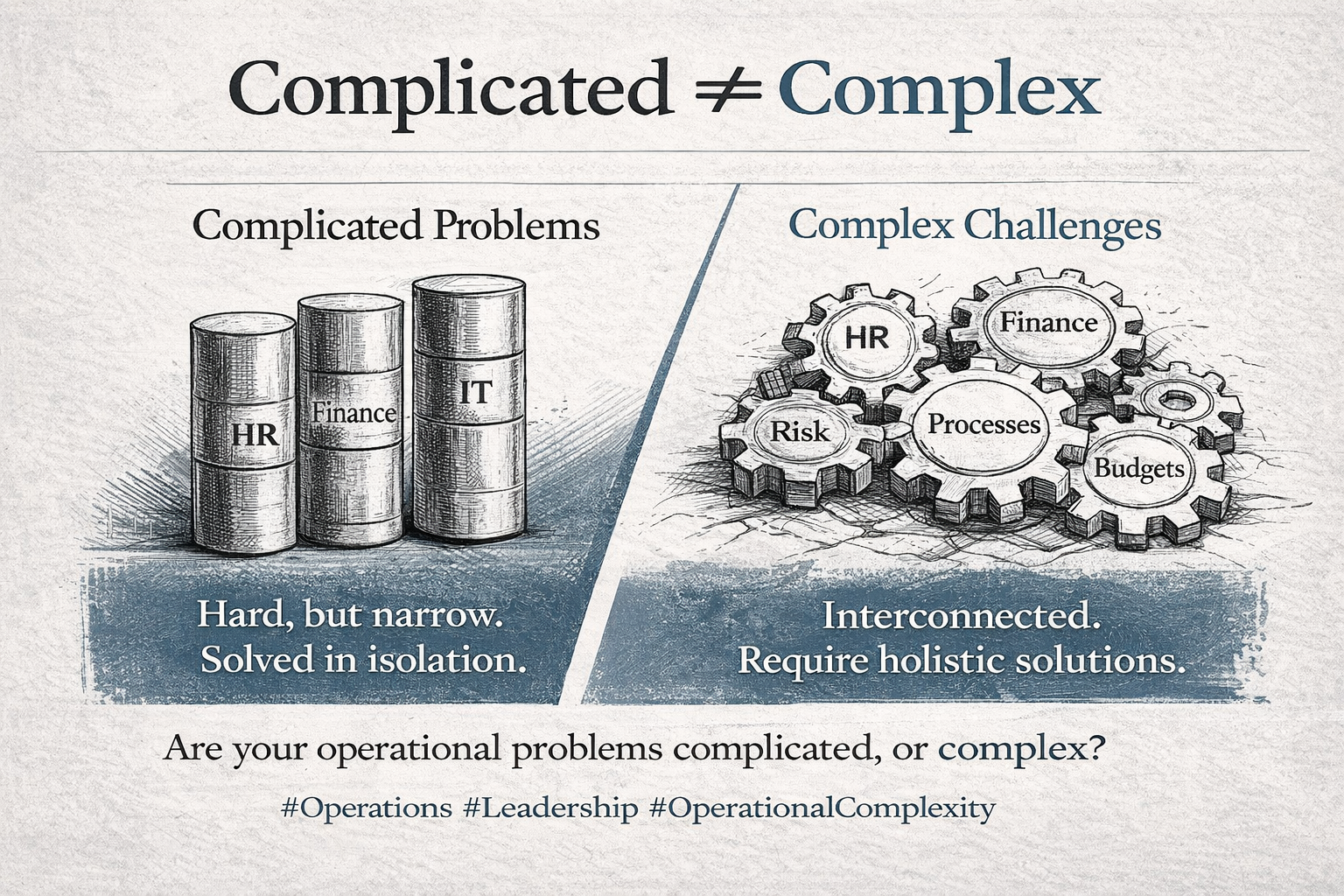
Appollo Explore brings the relationships between operational work and its supporting resources into one operating model. This gives COOs and other operations leaders a connected view of how their organization is equipped to deliver its goals.
The distinction begins with complexity and complication. Complicated challenges require depth within a specialist area. Complex challenges involve many interconnected elements that need to be understood together.
Specialist systems provide valuable depth in areas such as HR, finance, and risk. The operations leader’s challenge is to coordinate how those areas work together. Appollo Explore addresses that complexity by interlacing processes, policies, people, information & IT, budgets, and risks around organizational goals.
Here, interlacing means explicitly connecting these elements: the work that supports a goal, the people responsible, the information they need, and the resources and controls that enable delivery. That operational context also provides richer inputs to specialist systems.
These connections can be developed progressively, beginning with the operational priority you choose to address first.
Start with one priority. Build connections as you grow.
Appollo Explore’s connected approach can develop through focused, manageable steps. Begin with one operational goal or area where greater clarity would make a difference—such as responsibilities, information needs, budgeting, or risk.
Within that starting area, capture the work and add the detail relevant to your immediate priorities. Extend to other areas as your needs develop. Each addition builds on what you have already established, progressively connecting more of your operations.
The breadth of the platform gives you room to grow; your priorities determine where you begin and what's next.
Business processes: capturing the work and management
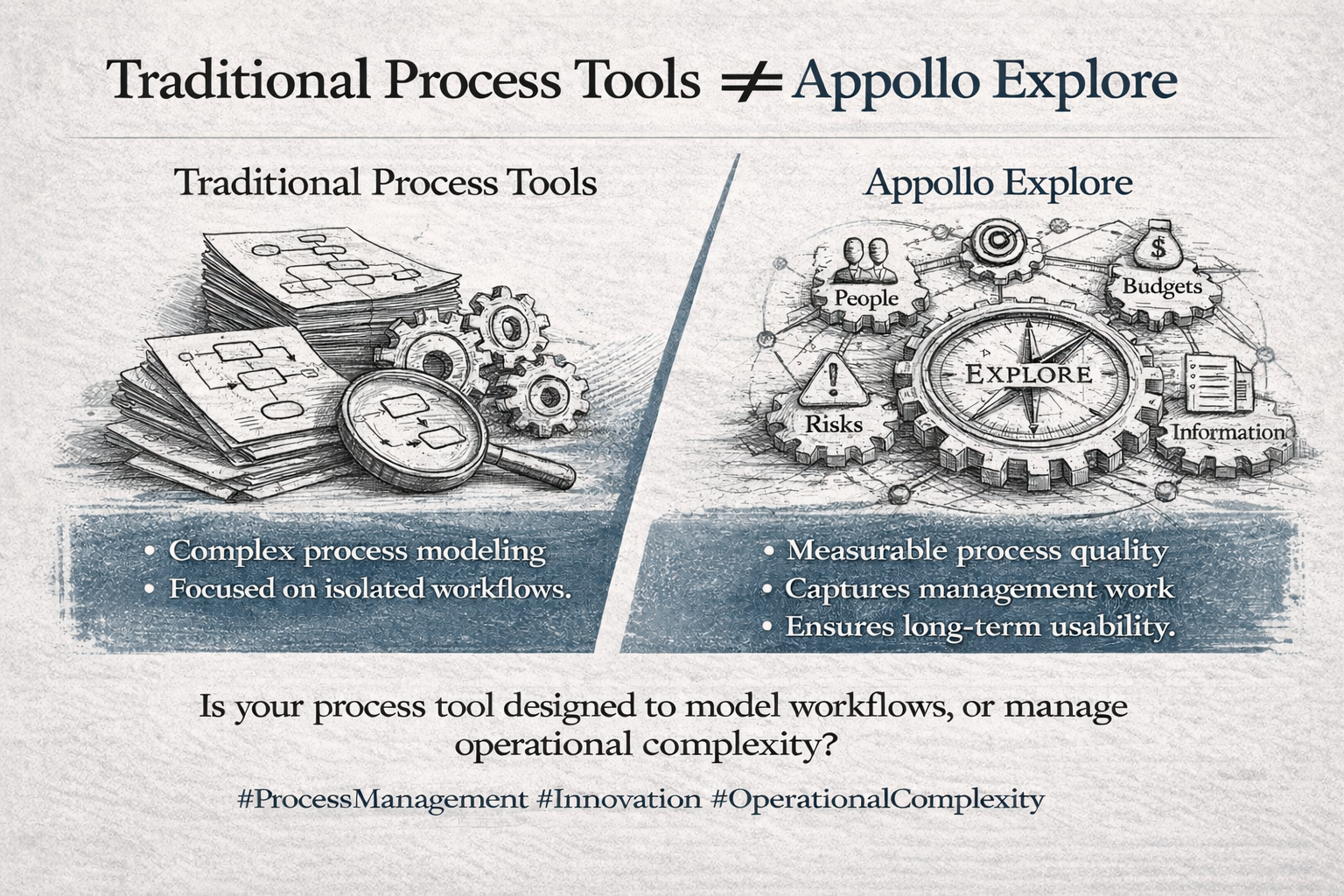
Appollo Explore captures management work alongside the activities that deliver an outcome. Its process approach connects both to business goals and the wider operational context.
Process mapping and optimization tools offer valuable depth in how activities flow. Appollo Explore adds a way to describe the management responsibilities that guide, coordinate, and oversee that work, including activities that do not follow a linear sequence.
-
Management made explicit. Management activities are derived from business goals and related to the work needed to accomplish them. Leaders can see how management contributes to delivery and where responsibilities need attention.
-
A measurable operating model. Completeness, importance, and control scores help leaders assess the process information they have captured, decide where to focus, and follow improvement over time.
-
Process knowledge that remains useful. Connected, navigable information gives managers and teams a practical reference for understanding work and its dependencies as operations evolve.
People: accountability built from operational work
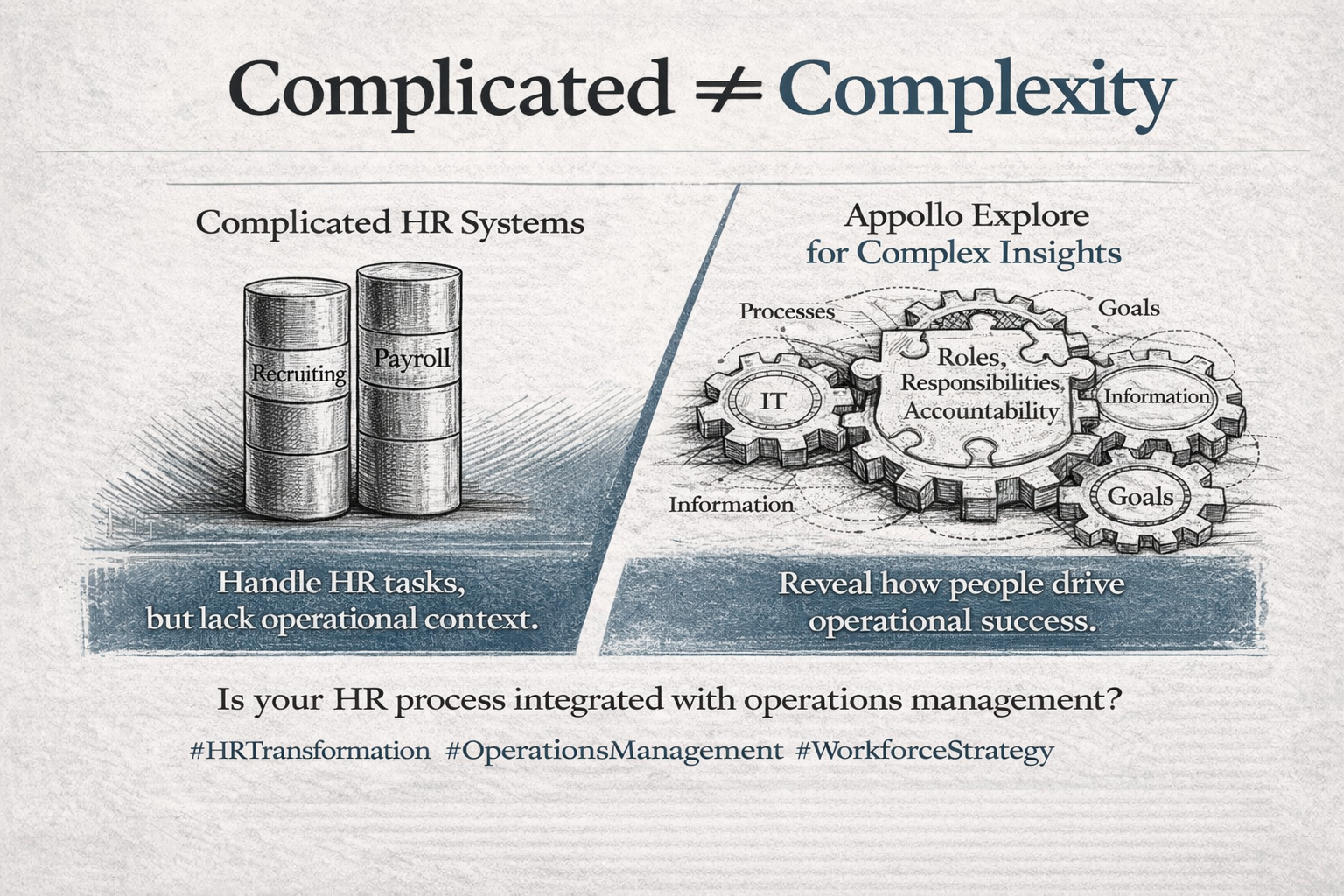
Appollo Explore builds the picture of a role from the work that person is responsible for and the goals that work supports. This adds operational context to the employee information held in specialist HR systems.
Responsibilities are defined at task level, then brought together into role and accountability views. Managers can explore how individual contributions connect across the organization.
-
Detailed responsibilities. Task-level assignments make ownership, accountability, and involvement explicit.
-
A coherent view of each role. Accountability diagrams bring those assignments together, helping managers discuss expectations, overlaps, and gaps.
-
Useful context for people decisions. The same work-based information can inform job descriptions, recruiting, and role development.
The difference is a view of people’s contributions grounded in the operating model, with clear connections to processes, information, technology, and organizational goals.
Information & IT: business needs before technology choices
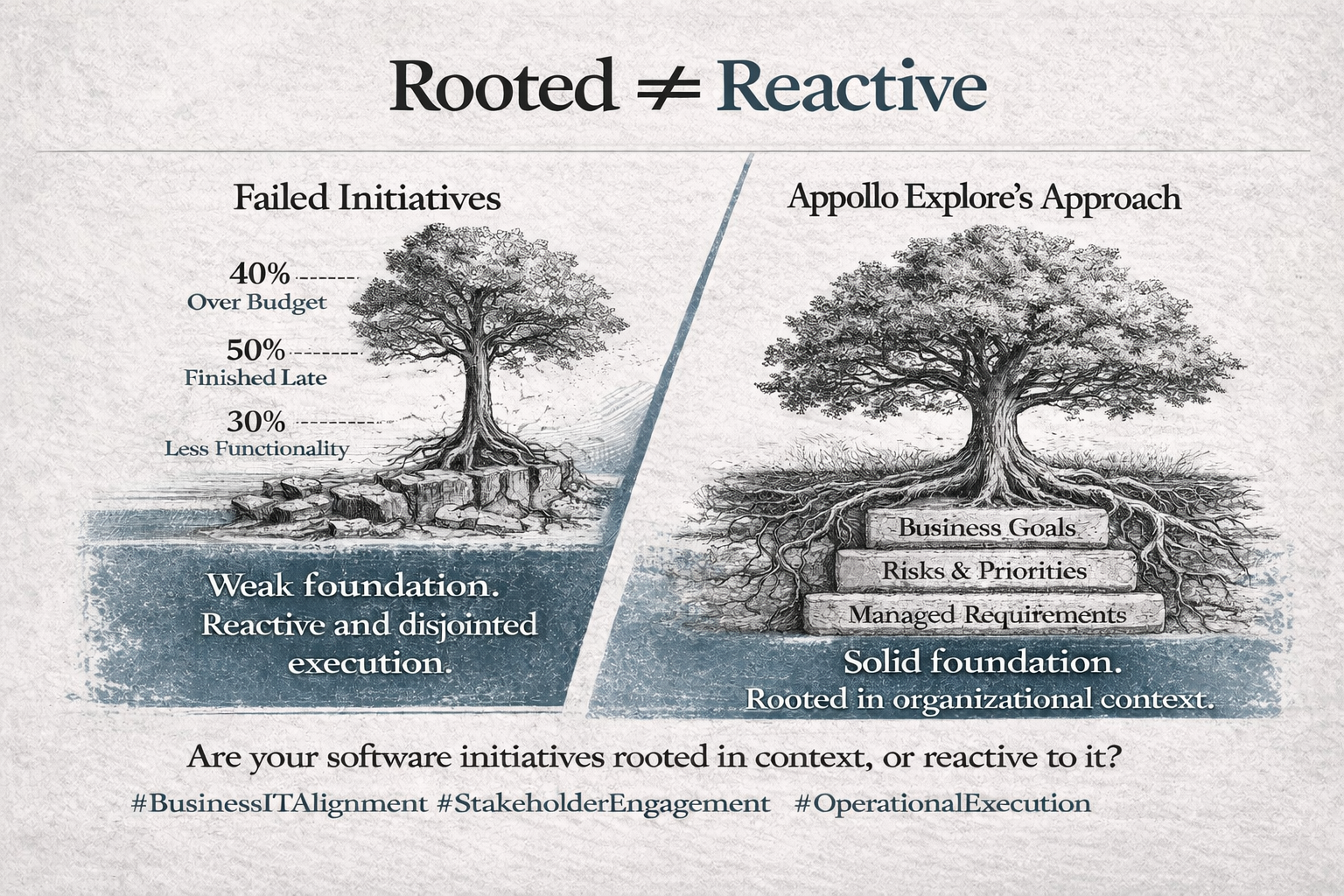
Appollo Explore starts with how information is used in operational work, then uses that understanding to inform technology decisions. Requirements emerge from the organization’s goals and management needs.
When information requirements are gathered in fragments, it can be difficult for business and IT teams to build a shared understanding. Appollo Explore gives that discussion a connected operational foundation.
-
Information in context. Define what information each activity needs and produces, alongside the people, policies, risks, and priorities involved.
-
A shared basis for decisions. Business and IT stakeholders can relate requirements to recognizable work and understand why they matter.
-
Technology choices grounded in operations. Use those defined needs to guide the evaluation or design of software solutions.
This approach helps operations leaders carry business intent through to technology discussions, with clearer priorities and a fuller picture of what successful support for the work requires.
You can begin with the information needs of one process or team, then extend that understanding across related work.
Budgeting: costs connected to work and goals
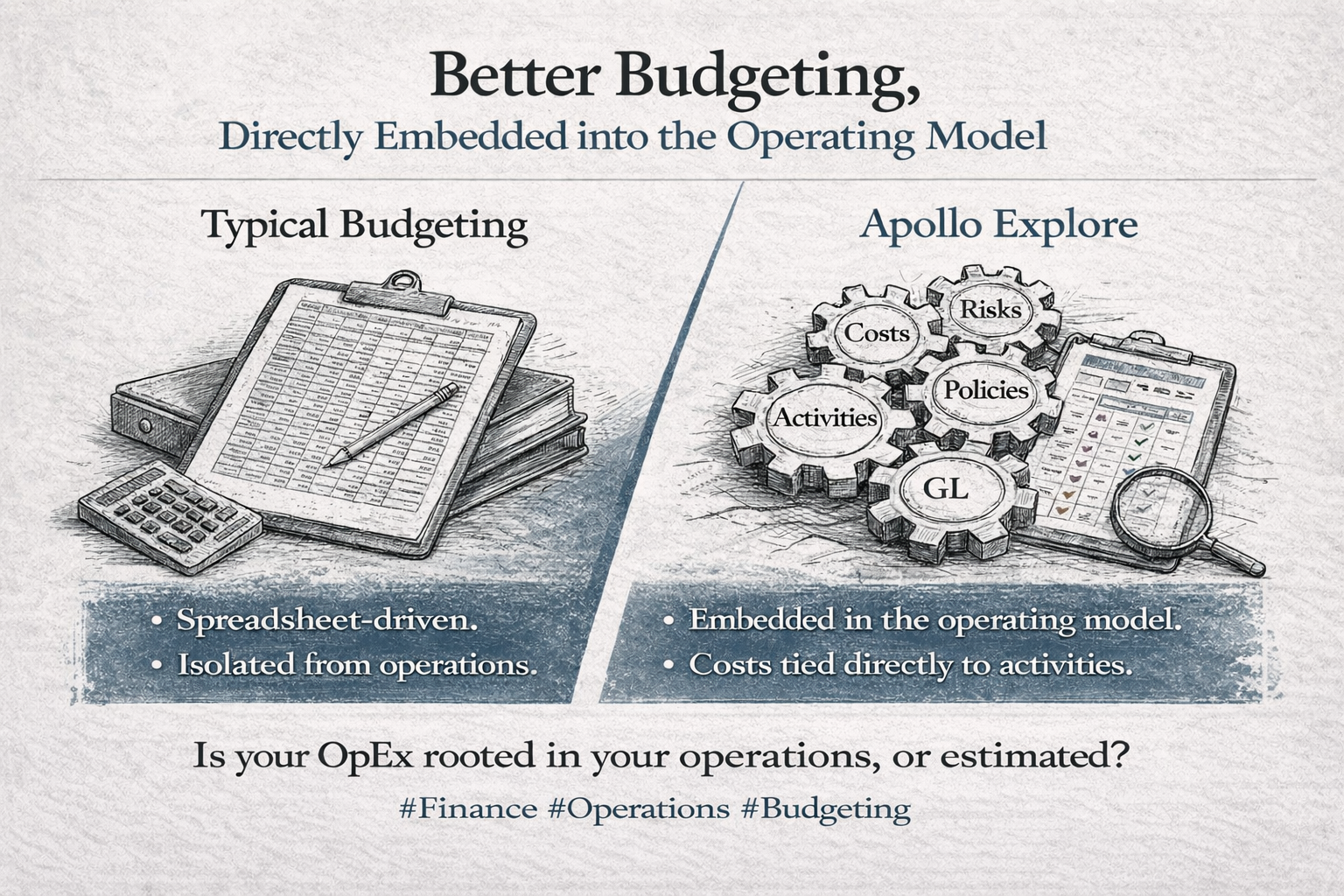
Appollo Explore builds operational budgets from the work the organization needs to perform. This gives leaders a view of resource needs that can also be mapped to finance’s general ledger structures.
-
Costs captured where work happens. Record cost and expense information against process activities or standardized cost codes.
-
Detail that rolls up. Bring those costs together for analysis and reporting while retaining their connection to the underlying work.
-
Resource choices in context. Review budget needs alongside people assignments, risks, importance, control levels, and policies.
The distinction is the connection between what funding is needed and what it enables. Operations leaders can discuss spending in terms of the work and goals it serves, with a clearer basis for considering priorities and trade-offs.
Risk: responses embedded in operational work
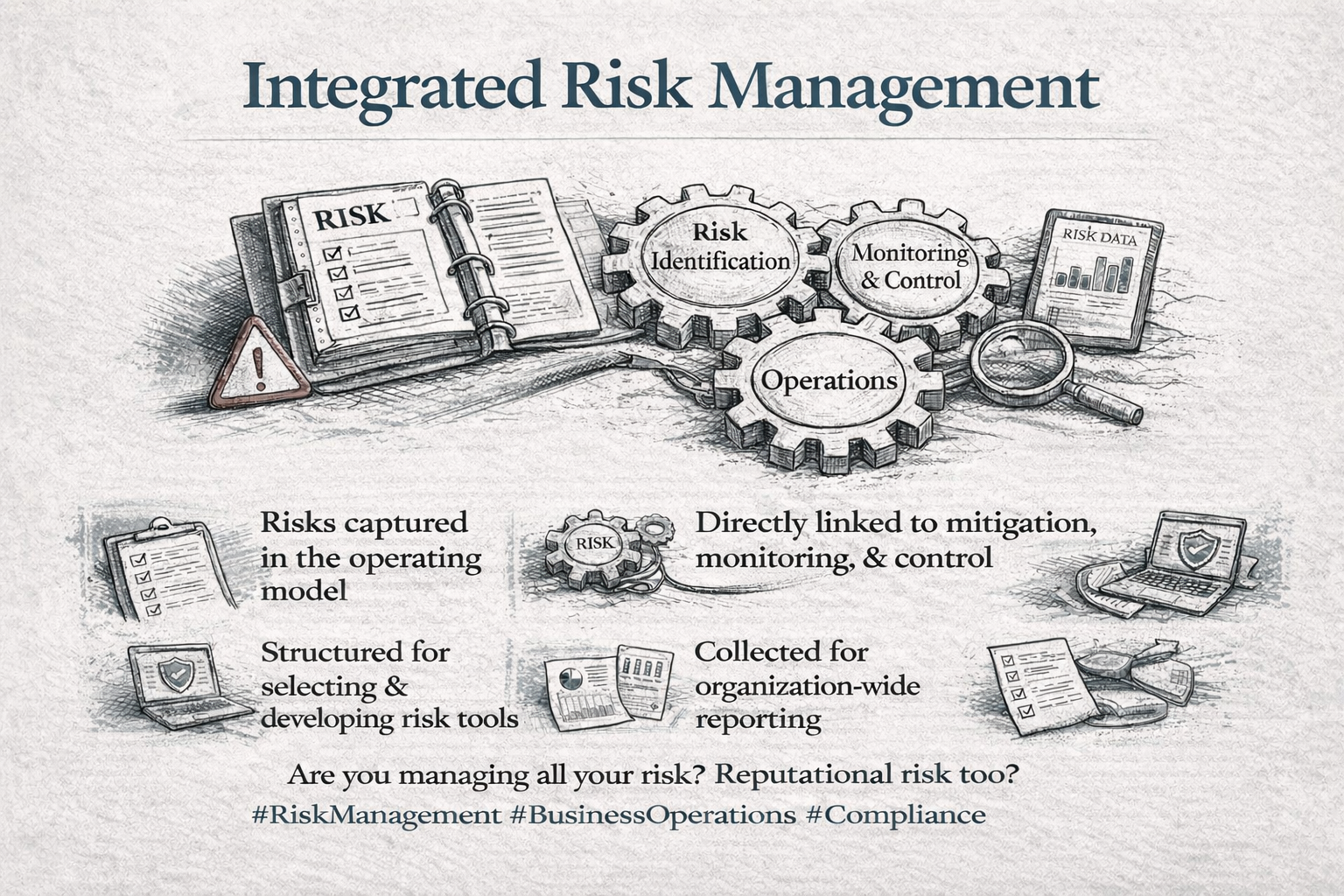
Appollo Explore connects each identified risk to the work required to mitigate, monitor, and control it. Risk responses become explicit operational responsibilities within the operating model.
Quality, productivity, reputation, and other operational risks can span teams and activities. Understanding those connections helps leaders see how a risk is being managed in practice.
-
Risk in its operational setting. Capture risks alongside the processes and goals they affect.
-
Responses that become managed work. Link mitigation, monitoring, and control activities to the people responsible for carrying them out.
-
A connected leadership view. Bring risk information together for review alongside the associated work, responsibilities, and resources.
This creates a clearer account of how operational risks are being addressed. It also provides context for specialist risk tools and for conversations with leadership, investors, and insurers.
AI & automation: strengthening the operating model
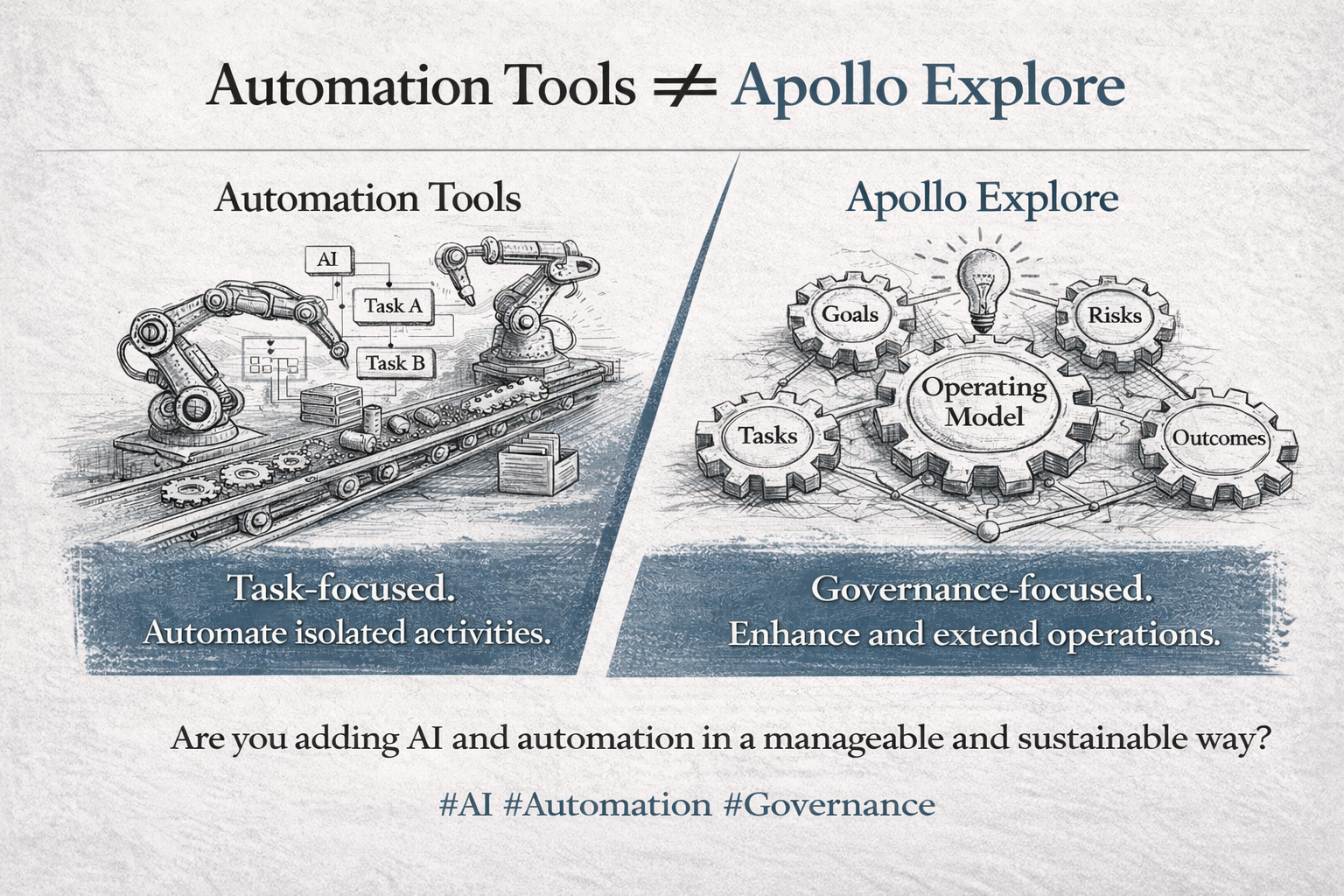
Appollo Explore uses AI to develop operational understanding and places automation decisions within that same operating model. This connects adoption to the work, goals, and responsibilities it is intended to improve.
Specialist AI and automation tools focus on particular activities. Appollo Explore provides the operational context for identifying opportunities, evaluating options, and following what changes after implementation.
AI to enrich operational understanding
Generative AI draws on the captured model to suggest goals, accountabilities, tasks, risks, and policies. It can also turn assigned responsibilities into job descriptions and recommend software or automation options relevant to defined work.
These suggestions help leaders develop a more complete and usable picture of operations while retaining the organization’s context and intent.
A connected adoption journey
Work items can be identified and marked as automation candidates, including activities with low control, high manual effort, or repeatability. Appollo Explore supports evaluation and selection, then tracks the quality and effectiveness of outcomes within their operational context.
That context matters because automation can change roles, information flows, and accountability. Keeping adoption within the operating model helps leaders manage those connections and review whether the change is improving the work.
One operating model that stays connected
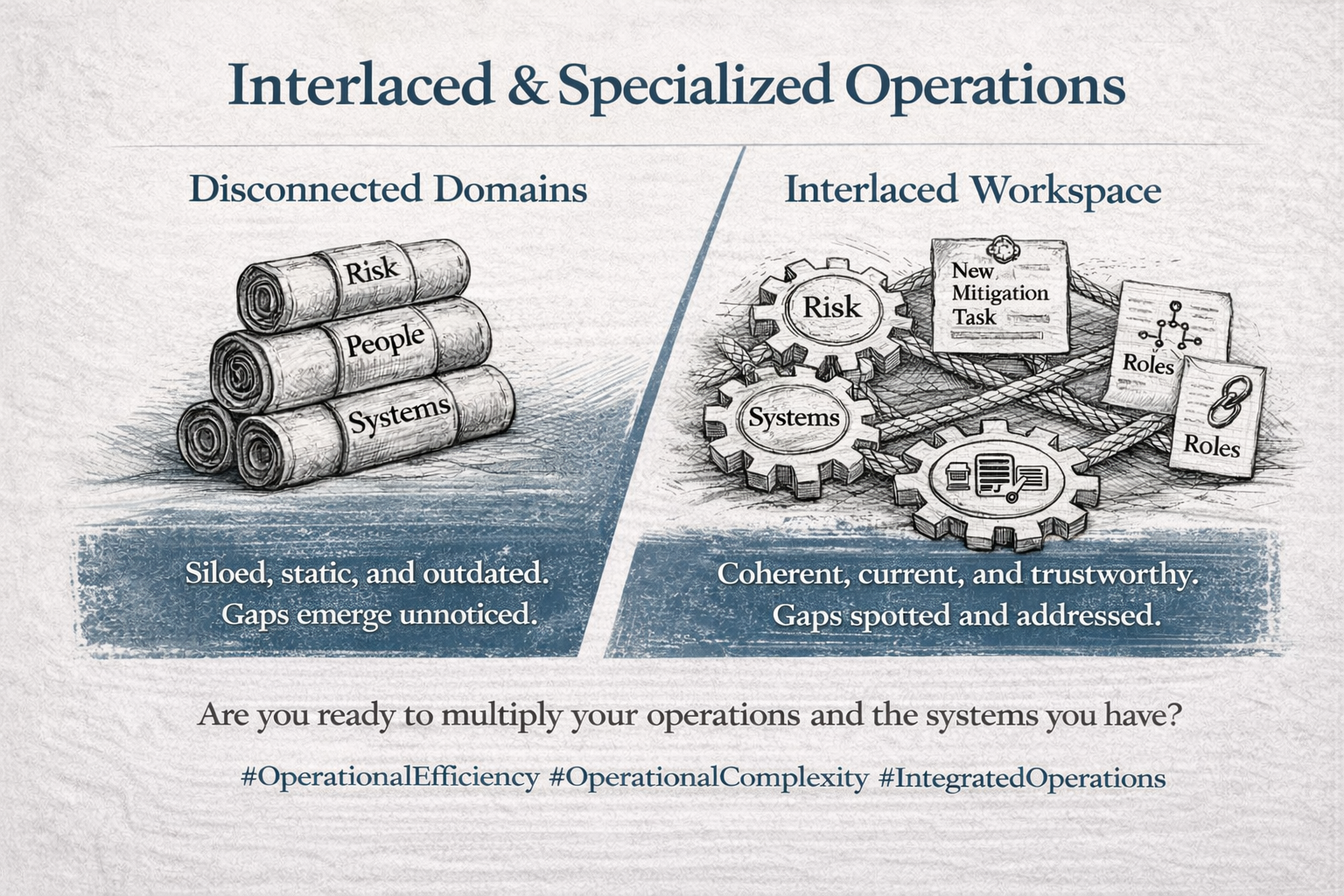
The unifying difference is how Appollo Explore keeps operational information connected as the organization changes. Processes, people, information, budgets, policies, and risks share a common operating model.
When something changes in one area, gaps are surfaced in related areas, helping managers identify what needs review. A change to work can be considered alongside its responsibilities, information needs, resources, and controls.
This gives each area of management a shared foundation while preserving the specialist detail needed elsewhere. Operational documentation becomes a living reference that leaders and teams can return to as decisions and circumstances evolve.
Your starting point remains part of the bigger picture. As you extend into other operational areas, the work already captured provides a foundation for new connections, helping clarity grow with each step.